a catholic story and audiobook excerpt
"Rosinella's Journey"

This is an excerpt from the book “Rosinella’s Journey” by Rosa Melino. It’s a story about a little girl who was born in Italy and moved very far away to Australia. Rosinella had to learn how to speak English plus her family didn’t live in a town or city in Australia. They lived in the bush or way out in the country. Now at this point in the story Rosinella is preparing to receive her First Holy Communion! Her religion teachers were nuns of the Sisters of Saint Joseph of the Sacred Heart order. Her mother, Bella, wanted all her children to know and love Jesus. So she was so grateful to have the good Sisters' help.... Click the big red button to listen and read along below!
AN EXCERPT FROM "ROSINELLA'S JOURNEY"

School life was daunting and Rosinella could not understand English very well. The children teased her and she would yell BASTA! BASTA! BASTA! Her classmates thought she was swearing at them and ran and told the Headmaster who then wrote a note for her to take home to her mother. Bella was asked to see the Headmaster at the school and after her mother’s visit the children were to told to stop teasing her. Her classmates had learnt their first Italian word. It was STOP! STOP! STOP!
The Sisters held Religion lessons for the children each week. Rosinella loved these lessons. The Catholic priest would visit monthly and he arrived on horseback. It was during these lessons that the Sisters taught Rosinella the Prayer to the Guardian Angels so that she would not be so frightened walking to and from school. This prayer helped her calm down and she began to enjoy the bush scenery as she walked along. There were many pretty and unusual flowers. The birds would often fly close by.
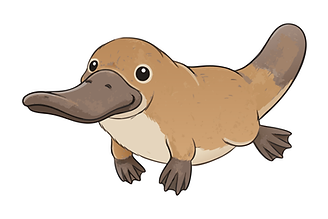
Not long after her brother Modesto joined her on the walk to school. He loved all the bush creatures and as they had to walk over a small bridge each day he would insist that they remain very still and watch as their friend, the platypus, showed himself to them in the murky water below. It was the ritual they both delighted in and platypus rarely missed being there.
The children were prepared yearly for their First Confession and Holy Communion. They had to attend weekly lessons for a year to be properly prepared to receive the Blessed Eucharist for the first time. Many of the children lived on faraway farms. Some of them also rode horses to school. Local children had to attend extra meetings in an area that allowed all children from the surrounding districts to gather as one group. Rosinella remembers that her father would take her on a five mile walk each weekend along the railway tracks as he could not afford the train fares. Rosinella liked the nuns and did not mind the long walk. She was 7 years old.
The week before she made her First Holy Communion Rosinella was told that all the children would board at St. Patrick’s College Gympie. The church was nearby. This College was built in 1904 and it had a sense of grandeur about it. Although Rosinella missed her parents and was alone for the first time in her life, the nuns were very kind to her.
All the children slept in a big dormitory with beds on the floor in rows. They would rise to the sound of bells and prayers. At night they were made to clean their teeth, shower and say night prayers. They were fed very well. One of the most memorable events was going with the nuns to nearby Tewantin beach. Rosinella once more heard the roar of the sea. They were allowed to play games of cricket on the beach and build sand castles on the sand.

In those times the First Confession was made the day before the First Communion Day. The children had been well prepared and so they were not afraid of the priest in the Confessional box. They had been taught to examine their Conscience of any sins that they had willfully committed. They knew it was not obligatory to confess slight errors. They were told of the difference between mortal sins and that at their age very few people would commit the deliberate mortal sins however they were told to be always watchful about this possibility. They were taught that if they committed mortal sins and did not seek forgiveness that they would go to Hell if death occurred.
During the evening of the Vigil of the Feast of the Immaculate Conception which falls yearly on December the 8th, the priests, nuns, altar boys and First Communion children processed around the Church of St. Patrick’s in Gympie before going to the Vigil Mass.
It was a special event with much singing in Latin, as was usual at that time. The smell of Incense preceded and filled the Church as they sang the much loved Advent Hymns.
On the following day, the Feast of the Immaculate Conception of the Blessed Virgin Mary, Mother of God, Rosinella’s First Holy Communion took place and it was a GREAT EVENT in her life. Much later she would think back to the link of the special celebrations that have been held every 8th of the month since, at the Sisters of St. Joseph of the Sacred Heart Mother house in North Sydney.
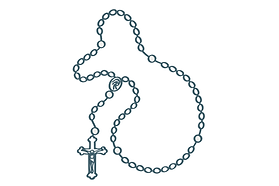
Her mother had given the nuns the long white dress and veil that she was to wear and they added the gift of a pair of white Rosary beads, a First Communion medal and her very own prayer book. They admired her in her fine attire and she felt very special.
Her family, along with the families of all the children were present at this Mass. The choir sang especially for them and the children were very solemn at they knelt to receive Jesus in the Eucharist for the very first time. A Communion Banquet followed with each child assigned a special place at table and the children each received a certificate to remember the day.
That final evening the nuns put on a concert for the parents, guests, priests and parishioners. Rosinella had learnt the Christmas Carol “Away in a Manger” along with the other children. The nuns asked if she would sing it for the people that evening. She was very shy but when the time came one of the priests lifted her over the heads of the people and place her on the stage. She sang as loud as she could and received much applause.

Rosinella returned with her family back to the pineapple farm. The Sisters of Saint Joseph realized that she loved doing religious studies and so they organized for her to receive Correspondence lessons in the Catholic Faith from Saint Mary MacKillop’s house in Mount Street, North Sydney. The lessons were mailed to her weekly and her teacher was a certain Sister Mary Joseph.
The first lesson had the picture of Jesus with His Sacred Heart to color and she colored this in carefully copying from the Holy card she had been given by the Sisters. She had grown to love what He had done for her. Bella made sure she mailed the completed lessons back each week. Rosinella never missed her lessons. They always came back, corrected with notes of encouragement from dear Sister Mary Joseph.

The Sisters of Saint Joseph continued their visits. Rosinella’s Christian faith kept growing despite many encounters with deadly taipan and death adder snakes, horrifying lightning strikes which killed an unborn baby brother, Anthony and an encounter with a dingo that entered her house whilst her parents were out visiting neighbors. She was minding her baby sister at the time and stood very still as she met the dog’s eyes. He turned and left the house without harming her.
Soon after the family were told that there was no further work left to do on the pineapple farm and Costanzo had to go looking for other work to maintain his growing family. He was assisted by the Sisters in finding work on a building site for a new church in Wallangarra and the Sisters came to say their Goodbyes and promised to pray for them. Rosinella was sad to leave the Sisters but not the snakes and dingoes. She still remembers their lonely howls at night.
She would later miss the Edwards family as she had admired the teenage children, Beth and Alan. They were allowed to attend the local dances and always dressed up for these social outings. As a going away present, Alan the older of the two, gave her a book titled, “Gone with the Wind.”
She recalled thinking it may have been an interesting book but it was too hard for her to read. Only much later would she realize what a lovely important gift it had been for her.

Little did Rosinella know, back then that she would later be visiting Saint Mary MacKillop’s tomb often and on the 8th day of the month in prayer for the eventual Beatification of this woman of Vision for the Christian Faith in Australia.
Her nuns also honored their foundress by allowing free entry to her Museum on this day. Her Feast day was also pronounced on this 8th day in the month of August.
She could never have hoped to be present at the Beautification held for Blessed St. Mary of the Cross MacKillop at the Randwick Racecourse on the 19th, January 1995. She shared this occasion with thousands of Australian people as Pope John Paul II pronounced her Blessed at an open air Mass.
Rosinella often wondered what would have happened to her and her family if Saint Mary MacKillop had not had the Vision to inspire so many young women to join her Sisters of Saint Joseph of the Sacred Heart.
Those Sisters had braved the same fears and hardships she too had felt and yet that had given so many the chance to learn the Gospel of Jesus Christ by living it themselves amongst the roughest terrain. Praise should go to those Sisters who taught from the Correspondence School in North Sydney and were responsible for teaching the Gospel from a distance to children in remote areas. They had enabled little children to come to know Jesus and overcome their fears.
Rosinella firmly believed now that the Sisters deserved to be thankful to God for such a Saint in their wonderful St. Mary MacKillop and that is why she has written this story.

SAINT MARY OF THE CROSS

Mary MacKillop was born in Melbourne, Australia on January 15, 1842. She was baptized Maria Ellen but everyone called her Mary. Her father, Alexander. had started his studies for the priesthood in Rome but decided it was not his vocation. He then moved to Australia where he married Mary’s mother, Flora. Both Alexander and Flora were Scottish immigrants. They had eight children, Mary being the oldest.
Mary was educated both in private schools and homeschooled by her father. Although a loving husband and father, he ended up failing as a farmer and then as a gold prospector. As a result, the family faced many material hardships.
At the age of 16, Mary worked as a clerk in a stationery store in Melbourne to help her family financially. Then in 1860, she took a job as a governess or nanny. While working as a nanny, she began to teaching not only the children she was taking care of, but other children in the town as well. A priest there, Father Julilan Tenison Woods, encouraged her in this good work of education.
In 1866 Mary and Father Woods opened up Saint Joseph’s School. The school provided a free education to all children, no matter how poor their family was. From that point on, Mary wanted to be a teacher. In particular, she had a great desire to teach children who were living with their families in what is called “the outback” of Australian towns. These included the Aborigines, considered outcasts of society at the time Mary lived.

During this time, God was calling Mary to her vocation as a nun – a bride of Christ. At first, Mary thought she would have to go to Europe to join an order because Australia did not have any orders or communities of nuns. Instead, with the help of Father Woods, in 1867 the two of them founded Australia’s very first order of nuns called the Sisters of Saint Joseph of the Sacred Heart. The “rule of life” they developed for the new community emphasized poverty, a dependence on Divine Providence, no ownership of personal belongings, faith that God would provide for their needs and the willingness to go where needed. The rule was approved by their bishop. Her religious name was Sister Mary of the Cross. By the end of the year, 10 more women had joined the order. The following year, the Sisters of Saint Joseph opened schools in other Australian cities, as well as an orphanage and a refuge for women released from prison.
As the order grew, Sister Mary of the Cross faced many challenges. There were disagreements with some of the sisters in the order as well as disagreements with clergy who did not fully understand the spirit of her mission. For example, she clashed with Bishop James Quinn of the diocese of Brisbane. She thought the Sisters should be in control of the schools they had opened there and the Bishop thought he should control them since they were in his diocese.
She was even excommunicated! – cut out from the Catholic Church – a decision that was reversed after a few months when the bishop who imposed it found himself on his deathbed. An episcopal commission later completely exonerated her, meaning she was not guilty of any wrong-doing.
Through all her trials, Sister Mary of the Cross never lost heart! She traveled to Rome twice to have the Rule of Life for the Sisters of St. Joseph officially approved by the Pope. She then spent time traveling throughout Europe, visiting schools and observing the best teaching methods that she could bring back to Australia.

With the approval of their rule, she returned home in 1875, and was unanimously elected as Superior General. Many more women joined the order as she spent her time opening schools, convents, and charities in Australia and on the islands surrounding it.

Here is Sister Mary of the Cross working at her desk.
Who is the statue of on her desk?
Hint: What is the name of the order she started?

In her later years, Mother Mary of the Cross suffered a stroke that paralyzed the left side of her body. For seven years she had to use a wheelchair. Her body was broken but her mind was strong and clear and her speech was intact.
She remained the Superior General of the order until her death in Sydney, Australia on August 8, 1909. She was declared a Saint by Pope Benedict XVI on October 17, 2010 - the very first canonized Saint of Australia!


